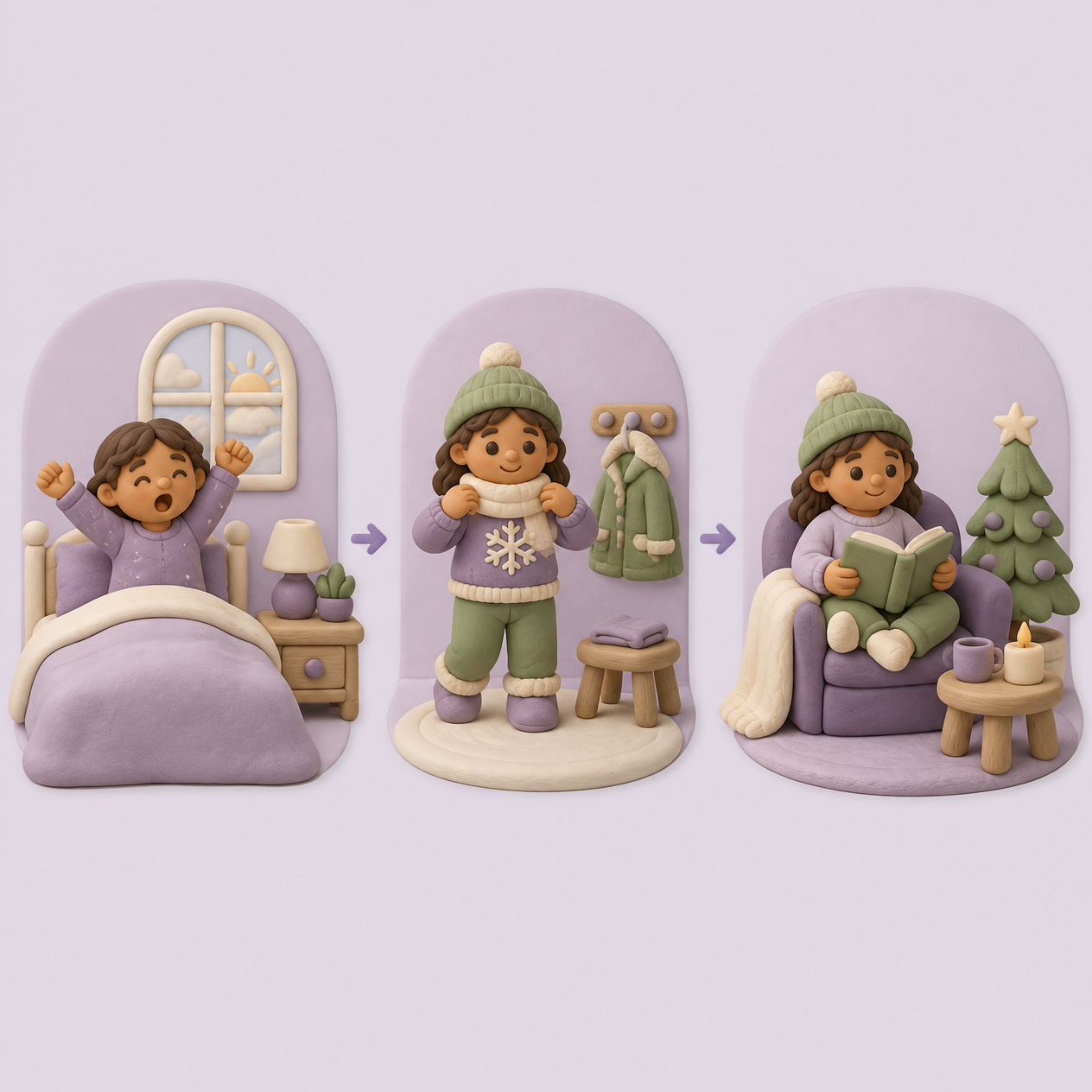
The holidays change almost everything at once. Schools close, meals shift, relatives visit, and the house looks and sounds different. For many autistic children, predictability is what makes the day feel safe, so a season built on surprises can be a lot. The goal is not a perfect holiday. It is a steady one, with a few anchors that stay the same while everything else moves.
1. Pick your anchors
You cannot keep every routine, so choose the two or three that matter most. For many families these are wake-up time, meals, and bedtime. Hold those steady, even on busy days, and let the rest be flexible. A child who knows breakfast and bedtime will happen as usual can handle a lot of change in between.
2. Show what is coming
A visual schedule is one of the most useful tools in this season. Use photos, drawings or simple words to show the day: breakfast, car ride, Grandma's house, dinner, home. Add special events as they come up, and give one-line previews of unfamiliar things ("Aunt Rosa will be there. She likes to hug, and you can wave instead."). Review it the night before and again in the morning.
3. Prepare for new places and people
If you are traveling or hosting, share the plan ahead of time. Photos of the house or the guests, a short list of who will be there, and a clear idea of how long you will stay all reduce anxiety. If a visit is long, build in a way to leave early without drama, and tell your host about it in advance.
4. Make a calm corner
Wherever you go, set up a quiet spot your child can use any time: a bedroom, a corner with a blanket, or the car. Pack a small comfort kit with headphones or earplugs, a favorite toy or fidget, familiar snacks, and a tablet or book. Tell your child where the space is and that using it is always okay. It is a tool, not a punishment.
5. Plan the food
Holiday meals are full of new smells, textures and rules. Bring at least one food your child reliably eats, and do not make a plate a battle. Eating a safe food at a busy table is still a success. If big dinners are hard, an earlier or separate meal can work just as well.
Be kind to yourself (and your relatives)
Some family members may not understand why you are skipping a long dinner or leaving early. A short, friendly script helps: "We are keeping things low-key so we can enjoy our time with you." You do not owe anyone a long explanation. A shorter, calmer visit is often better than a long one that ends in tears.
Try this today: Write down your child's two or three anchors for the season, then make a simple visual schedule for the first holiday event on your calendar.
Gentle Compass shares general information and ideas, not medical or clinical advice. For individual support, talk with your child's care team.